Available for Internships
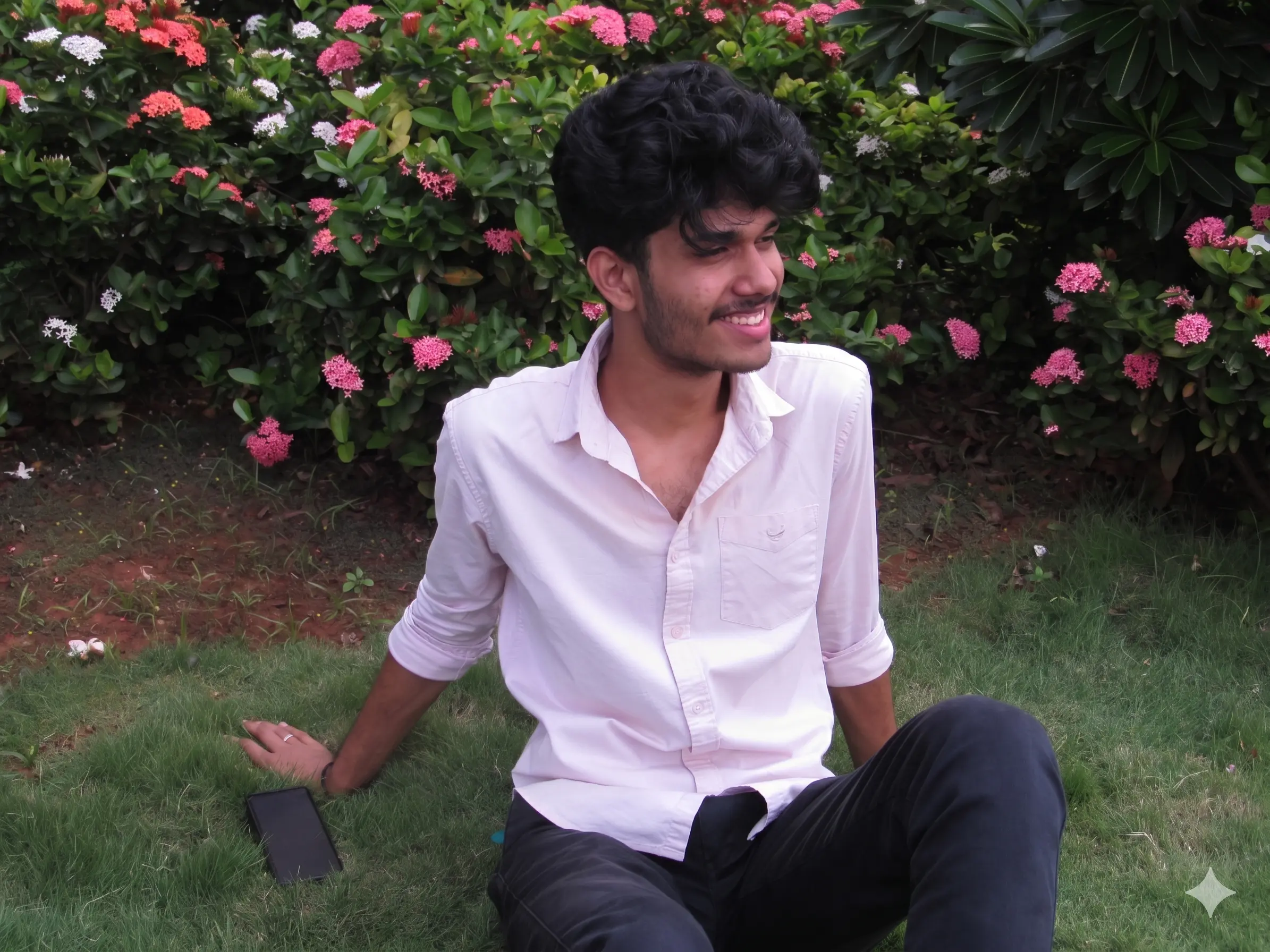
Final-year Electronics and Communications Engineering student at VIT-AP. I buildv embedded firmware, linux drivers, and hardware accelerators. Most problems get interesting when you stop trusting the abstraction.
It started with a bluetooth robotic arm at 13. I didn't have a datasheet. I didn't know datasheets existed. All I knew was I wanted to understand why it worked.
That question "why?" never left. It kept following me through every project. And every time I thought I had the answer, I'd realize there was another layer worth understanding.
Now I enjoy working at the hardware-software boundary. I'm drawn to problems that reward understanding the system beneath the abstraction, whether that means debugging, designing, or building from the ground up.
Outside of that I play a lot of chess, occasionally basketball, and spend more time than I should listening to a song on repeat until I've figured out exactly what the lyrics are doing.
Hardware, firmware, and ML. Somethimes all three at once.
A chip with two processors inside needs both of them talking to each other reliably. This project brings up both cores on an STM32MP157 from scratch, runs a real-time control loop on one and Linux on the other, and studies exactly how fast they can pass messages and what slows that down. The application running on top is a 1 kHz adaptive PID control loop..
Running a neural network on a chip that has both a processor and programmable logic on it. The processor handles setup and results; the programmable logic does the heavy math in parallel. I wrote the hardware description for the convolution layer myself and optimised it until it ran 2.67x faster than doing the same thing purely in software, while using a fifth of the chip resources.
Triggered by the Tirupati laddu adulteration controversy: could a small device tell the difference between pure and adulterated ghee by smell alone, with no lab equipment? Built a sensor array that reads the chemical signature of heated ghee, trained a tiny classifier that fits on a microcontroller, and got to 86.6% accuracy running entirely on-device.
A drone you control over a cable, for situations where radio links are unreliable or battery life matters more than freedom of movement. I replaced the standard remote control radio with a custom communication stack, built a flight dashboard with live telemetry, and added a circuit to switch between tether power and battery mid-flight. It flew.
My university's humanoid robot. It could hold a conversation, recognise faces and remember who it had met before. Demonstrated to the HRD Minister of Andhra Pradesh at two public events.
Experiments, side projects, half-finished ideas, and things that didn't make this list. The interesting stuff usually lives here first.
Bluetooth-controlled robotic arm, before I owned a multimeter or knew what a datasheet was. The start of everything.
Led my school team to the finals of the pan-Asia Young Innovators Program (YIP 2019). First time competing at that scale.
Designed and shipped a personal site with an interactive chatbot. First real full-stack project, and the reason this one exists.
National Hackathon 2024 (VIT-AP) and TinkerQuest '24 (IIT Roorkee × Redcliffe Labs), among others. Rapid iteration under pressure turned out to be a useful skill.
Government innovation grant for CogniLift, a neurofeedback-based brain activity monitoring and therapy device. First time building something at the brain-computer interface, and the first time someone external put money behind the direction.